
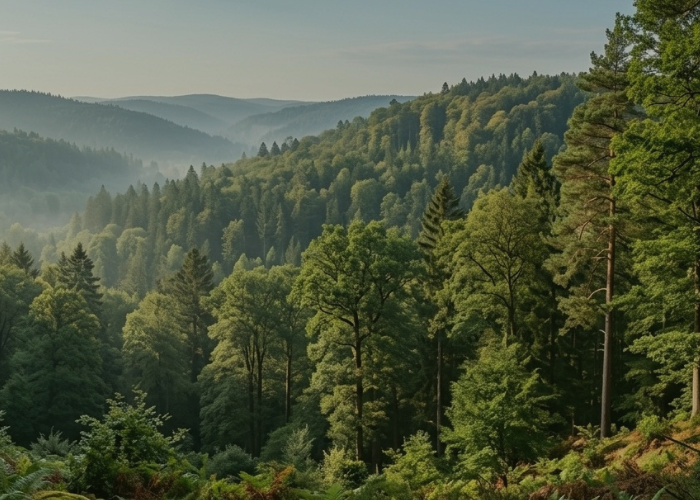
21 March, the International Day of Forests, is not only a moment for reflection – it is a reminder that protecting forests requires moving beyond commitments toward workable, predictable frameworks that align environmental goals with economic realities.
The International Day of Forests provides an important opportunity to reflect on the ecological, economic, and social value of the world’s forests. According to the FAO, in 2020, 31% (4.1 Gha) of the globe was covered by forest, with 9.0% of that forest being classified as a primary forest. Beyond supplying essential products, forests play a critical environmental role: they regulate the climate, store carbon, protect biodiversity, and maintain water and soil stability. Socially, they support the well-being of millions of people, including indigenous and rural communities whose livehoods, cultural traditions, and food security depend on a healthy forest ecosystem.
Yet, pressures on forests remain high. Global forest loss continues at an alarming pace – equivalent to 2,400 trees per minute – mainly driven by land-use change, climate pressures, and the increasing frequency of wildfires. At the same time, many countries are strengthening forest monitoring systems and governance frameworks to respond to these challenges more effectively.
Within this evolving landscape, the EU Deforestation-free Regulation (EUDR) represents an important – yet complex – policy instrument. The ambition is significant and positions the EU as a global standard-setter. However, implementation challenges remain substantial. The recent second postponement – now shifting the timeline to December 2026 – highlights ongoing gaps in readiness. While delays may offer short-term relief, they also risk increasing uncertainty for both producing countries and companies, potentially slowing down investments in compliance and traceability systems. That’s why, in September 2025, we have proposed a two-year, no-sanctions transition phase to test the system, fix remaining gaps, and provide the predictability needed for effective implementation.
Without a structured transition, there is a real risk that the regulation’s ambition is weakened – not by lack of commitment, but by uneven readiness and fragmented implementation.
Sustainable Palm Oil: Its Potential and Challenges
Among the seven commodities covered by the EUDR, palm oil stands out as one of the most advanced supply chains in terms of preparedness. After years of international scrutiny and boycotts, major producing countries – such as Indonesia and Malaysia – have made significant efforts to balance economic growth with environmental protection, investing in more transparent and traceable production systems.
Deforestation in Indonesia has fallen by 64% between 2015-2017 and by 2022, it was the lowest of any tropical country. Meanwhile, Malaysian deforestation fell by 57%, the fourth lowest drop in the tropics. This success occurred by stronger forest fire prevention policies, monitoring, and rehabilitation.
How Community and Technology Are Reshaping Forest Protection
Protecting forests does not mean halting economic growth or penalizing businesses. Instead, it requires investment in innovation, accountability, and the sustainable development of agri-food supply chains.
Initiatives such as the AIM4Forest program, launched by the FAO, offer a concrete example of this direction, combining advanced monitoring tools with the knowledge and active involvement of indigenous peoples and local communities to improve forest management. Yet, this is only one piece of a much broader transformation.
To protect forests across the globe, what is needed is stronger alignment between public policies and private sector strategies. Effective forest protection relies on clear regulatory frameworks, monitoring systems, and initiatives that encourage sustainable practices across entire value chains. At the same time, companies have a critical role to play by investing in traceability, transparency, and responsible sourcing. Ultimately, the goal is not only to curb deforestation, but to build resilient systems in which environmental protection, economic development, and social inclusion reinforce one another. Achieving this requires coordinated, long-term action across governments, industries, and communities, moving from fragmented initiatives to integrated solutions capable of safeguarding forests for generations to come.