
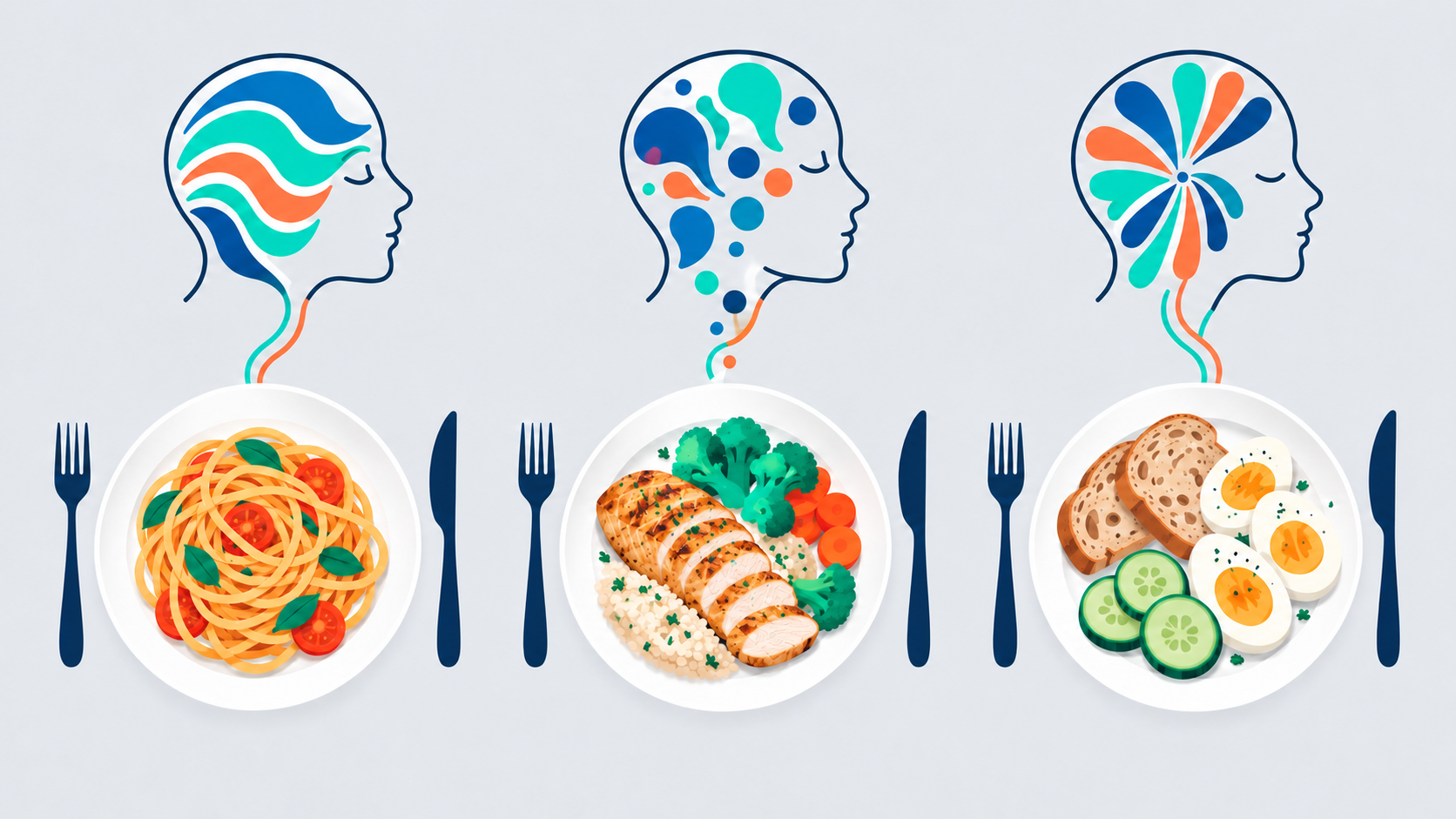
Europe’s food policies are designed for a default eater. Millions of Europeans are not one. Picture a canteen at noon, in a school, an office or a hospital. Trays clatter, voices bounce off the walls and the smell of three different dishes fills the air. For most people it is simply lunch. For someone who is autistic or has ADHD, it can be too loud, too bright and too much, and the plate in front of them may hold nothing they can bring themselves to eat. European nutrition policy rarely sees this person. It assumes we all taste, smell and feel food in roughly the same way, notice when we are hungry and find it easy to plan a meal. For the tens of millions of Europeans who are autistic, have ADHD or are otherwise neurodivergent, that assumption fails every day.
In brief:
- Food isn’t one-size-fits-all: for neurodivergent people, sensory features like texture, smell and appearance can shape what feels possible to eat.
- Food policies often assume a “standard” consumer: rigid menus and restrictions can leave little room for people with limited or highly specific food preferences.
- Inclusion starts with practical choices: menus available in advance, sensory-friendly options and calmer eating environments can make meals more accessible for everyone.
Not picky, not rare
These eating differences are common, and they have a biological basis. Around one in five autistic people show signs of avoidant/restrictive food intake disorder (ARFID), where the range of accepted foods becomes so narrow that health suffers.
People with ADHD face a far higher risk of binge eating and bulimia. Texture, smell, and appearance matter enormously, and for many neurodivergent people hunger and fullness signals arrive faintly, late, or not at all. “Just listen to your body” assumes a conversation not every body is having.
The consequences can be serious. Doctors still diagnose scurvy, a disease we associate with eighteenth-century sailors, in autistic people whose weight looked perfectly normal. Money makes it harder. Nearly a third of families raising an autistic child face food insecurity, and anyone who relies on a few “safe foods” knows how a changed recipe or an empty shelf can upend a whole week of meals.
A policy blind spot
Europe is not short of school food rules. Every EU Member State has a school food policy, and the European Commission’s own mapping shows that these policies set standards for nutrients and portions, limit vending machines and marketing, and often ban sugary drinks. How they do it varies enormously.
In 2015, Poland made a detailed list of permitted foods mandatory in schools, explicitly banning added sugar, added salt and white bread.
Finland, which has offered a free meal to every pupil since 1948, treats lunch as part of the curriculum: its national recommendations call for calm, unhurried meals, pupil participation and attention to the whole dining environment.
Neither model was designed with neurodivergent pupils in mind, but they point in very different directions. A list tells a pupil with only a handful of safe foods what they cannot eat. A calm, participatory meal gives them a way in.
Beyond schools, the picture is the same. The European Accessibility Act, in force since June 2025, does not cover food labels, and the EU school scheme says nothing about inclusion.
Fixed menus in hospitals and care homes, or rules such as “try one bite”, can take away the only meal a person is able to eat. Pressure may change one lunch. Understanding builds the capacity to eat well for life.
What Europe can do now
Europe has a real window. As the school scheme is renegotiated for the post-2027 period, it can make room for sensory-adapted options, menus published in advance, and quiet places to eat; the same principles belong in hospitals, care homes, and workplace canteens, where neurodivergent adults eat every day.
The next revision of EU labelling rules can bring easy-read, pictorial food information within everyone’s reach. Research funding, including the upcoming Horizon Europe call on disability and inclusion, can support studies led by neurodivergent people themselves, and training caterers and clinicians would cost little and change a great deal.
This is not a niche concern. The UN Convention on the Rights of Persons with Disabilities recognises adequate food as a right. The question is whether that right truly applies to every mind.
Every mind eats differently.
Every food policy should account for it.