
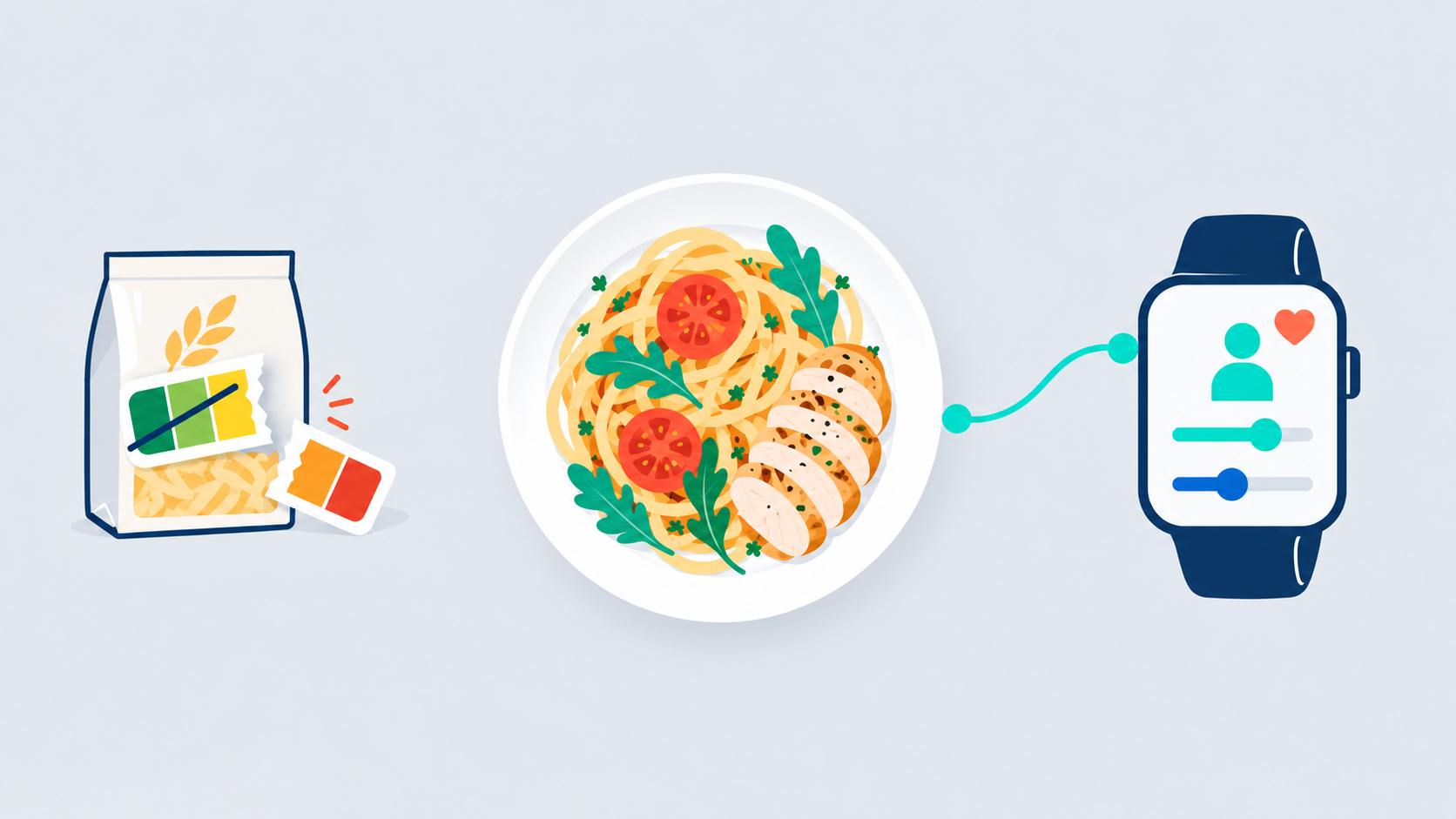
Poland is taking a more liberal approach to food information and withdrawing Nutri-Score from domestically produced foods. The decision invites reflection on the limits of labels that grade foods without considering individual needs, habits and the wider diet. The challenge is to help consumers make better choices, rather than decide for them.
In a nutshell:
- Poland is taking a different path on Nutri-Score. It is phasing out the label on domestically produced foods, with a transition period until 2028 for placing products on the market and until 2030 for selling remaining stocks. Some products from other EU countries will be allowed to retain the label.
- A score cannot capture a lifestyle. An assessment per 100 grams or millilitres does not account for actual portion sizes, consumption frequency or individual needs.
- More knowledge, greater freedom of choice. Nutrition education, precision nutrition and artificial intelligence can help consumers understand food better and develop habits that reflect their needs and lifestyles.
Poland’s decision on Nutri-Score
In a letter dated 24 September 2026, the Polish Ministry of Health outlined the withdrawal of Nutri-Score and similar front-of-pack labelling schemes subject to national notification. Of the 25 organisations that took part in the consultation, 22 opposed their adoption and notification.
The products concerned may be placed on the market until 31 December 2028, while remaining stocks may be sold until 31 December 2030.
However, Nutri-Score will not disappear from shelves entirely. Foods produced and labelled in other EU countries that officially recognise these schemes may continue to be sold in Poland under EU rules on the free movement of goods.
The decision leaves an important question open: which tools can help consumers better understand what they eat?
The limits of a letter grade
Nutri-Score promises to simplify food choices and help tackle obesity and non-communicable diseases. But reducing a nutritional assessment to a letter and a colour is an overly simplistic approach: it may influence purchasing decisions, but on its own it does not guarantee tangible health benefits. Prevention requires attention to portion sizes, consumption frequency and individual needs, which a product score cannot capture.
Calculating a score per 100 grams or 100 millilitres provides a common basis for comparing products, but does not necessarily reflect actual portions. The oil used to dress a dish, for example, is consumed in very different quantities from a dish served as a main meal.
How often we eat a food and what we eat it with also matter. Eating something occasionally is different from eating it every day. Its nutritional contribution must also be considered alongside the other foods in the diet.
People and their nutritional needs differ too. Age, metabolism, physical activity and health conditions make each of us different. Yet the score stays the same: it assesses certain characteristics of a food, but cannot determine how well that food meets an individual’s needs.
Nutrition education supports independent choices
The Polish Ministry’s emphasis on consumer education points to a priority for investment. Reading a nutrition table, assessing a portion and putting together a meal are skills that help people make their own informed decisions.
To be useful, this knowledge must fit into everyday life. Guidance that ignores budgets, working hours, preferences or the time available to cook is difficult to follow.
Precision nutrition connects scientific knowledge with individual needs. General dietary recommendations remain an important foundation; personalisation helps people apply them in ways that reflect their characteristics and habits.
How data and AI can support food choices
Nutrition education is the starting point. It helps people understand nutritional information and use it in everyday decisions. This also requires reliable product data, which companies can provide through clear information on ingredients, nutritional composition and portion sizes.
Nutrition apps can make this information accessible and understandable, helping people compare products and learn more about their own habits. An AI assistant could combine product data with information voluntarily shared by the user to suggest food choices suited to their needs, preferences and budget.
Wearable devices can add information about physical activity and daily habits. QR codes on packaging could provide access to explanations and guidance on how to use a product that would not fit on the label.
Technology must also help people understand the reasons behind its suggestions. An automated answer without an explanation does not strengthen consumer autonomy.
This requires a solid scientific basis, transparent criteria, protection of personal data and clarity about the limits of the recommendations.
AI can then support nutrition education and the work of professionals, making it easier to turn information into practical choices.
Measuring prevention by its results
Effective food policy must deliver tangible results: strengthen nutrition literacy, help people make informed choicesand contribute to better health.
Poland’s withdrawal of Nutri-Score gives Europe an opportunity to discuss where to invest to achieve these goals, putting education and individual needs at the centre.
Grading a product is simple. Helping a person choose takes more. That is the standard by which the ambition of personalised prevention should be measured.