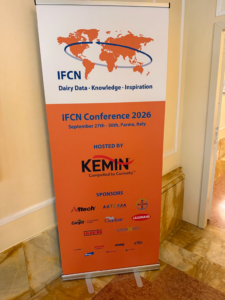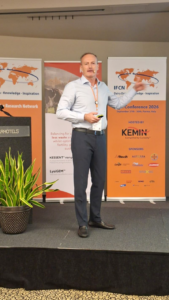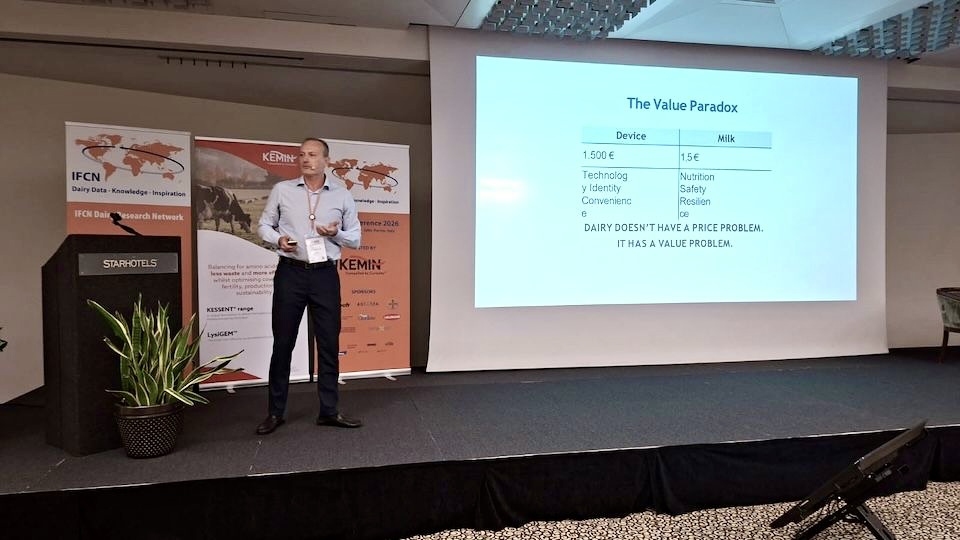
What do we really see when we look at the price of milk? At the IFCN Dairy Conference 2026 in Parma, Pietro Paganini explored the gap between the value dairy creates and the value consumers and policymakers recognize. His intervention connected changing consumer behavior, artificial intelligence, and food security, outlining how dairy can strengthen its contribution to a more diverse and resilient protein system.
Explore key policy takeaways from the event in our summary report and read Pietro’s speech: download it now.
In a nutshell:
-
Close the Dairy Value Gap. Make dairy’s contribution to nutrition, innovation, and reliable food supplies easier to understand.
-
Make evidence accessible to people and AI. Clear explanations and transparent sources can support more informed food choices.
-
Advance Protein Coexistence. Animal, plant, and emerging protein sources can compete, innovate, and complement one another.
The Dairy Value Gap
A carton of milk is the endpoint of a complex system. Behind it are farming, animal health, science, processing, food safety, refrigeration, logistics, and human expertise. At the supermarket shelf, much of that work becomes invisible.
Paganini describes this mismatch as the Dairy Value Gap: the distance between the sector’s contribution and the value people perceive.
Affordability remains essential, especially when household budgets are under pressure. But price alone cannot explain everything a product delivers or the capabilities required to make it available every day. Closing the gap means helping consumers and policymakers understand those contributions and assess the trade-offs involved.
What Does AI Understand About Dairy?
Consumers face overlapping questions about nutrition, sustainability, animal welfare, processing, and price. Access to more information does not automatically make these choices easier.
AI is becoming an intermediary between food evidence and everyday decisions. Instead of comparing several sources, people can ask a single question about milk, protein, or plant-based alternatives and receive a synthesized answer.
Paganini calls the broader delegation of searching, filtering, and interpreting information cognitive outsourcing. It creates opportunities to make complex knowledge more accessible, while increasing the importance of how evidence is presented and evaluated.
For dairy, this raises a strategic question: what does AI understand about the sector? Reliable research needs to be discoverable, clearly explained, and connected to its context. Transparent sourcing and acknowledgment of uncertainty are essential to credibility.
Dairy as Food Infrastructure
Dairy’s contribution extends beyond individual products. Farms, processing facilities, cold chains, and trade networks form an infrastructure that helps deliver nutrition consistently.
That capacity matters when energy costs rise, supply chains are disrupted, or climatic conditions change. Food resilience depends on a system’s ability to keep functioning under pressure.
Viewing dairy through this lens gives investment and innovation a broader purpose. Better animal health, production technologies, and efficient resource use can strengthen the ability to maintain supplies and adapt to changing conditions.
International trade is part of that resilience. Connecting production with demand through diversified, functioning markets helps address regional imbalances and supports access to food.
Protein Quality Beyond the Numbers
Providing enough calories remains a fundamental challenge. Alongside it, food systems must meet increasingly diverse nutritional needs, including those associated with aging and changing lifestyles.
Grams of protein tell only part of the story. Essential amino acids, digestibility, the overall nutrient profile, affordability, and accessibility all matter.
Dairy’s proteins and versatility give it a role across familiar foods and specialized nutritional applications. Its contribution should therefore be assessed through the nutrition delivered and its relevance to different people, diets, and stages of life.
This also requires more useful consumer information: guidance that helps people understand where a product fits within their own needs and preferences.
Protein Coexistence as a Strategy
Paganini’s principle of Protein Coexistence places dairy within a diverse protein system. Animal, plant, and emerging sources have different nutritional and functional characteristics, and their suitability varies across diets, cultures, and economic circumstances.
Competition can encourage better products and production methods, while diversity can strengthen resilience and expand consumer choice. Policy should assess nutritional, environmental, and economic outcomes with attention to these differences.
For dairy, leadership means demonstrating its contribution while continuing to improve environmental performance, animal welfare, and affordability. Clear communication must be supported by measurable progress.
Making dairy’s value visible starts with evidence people can understand, and results they can evaluate.
Event Snapshots