
Shaping Smarter Health Policies: Insights from Stockholm
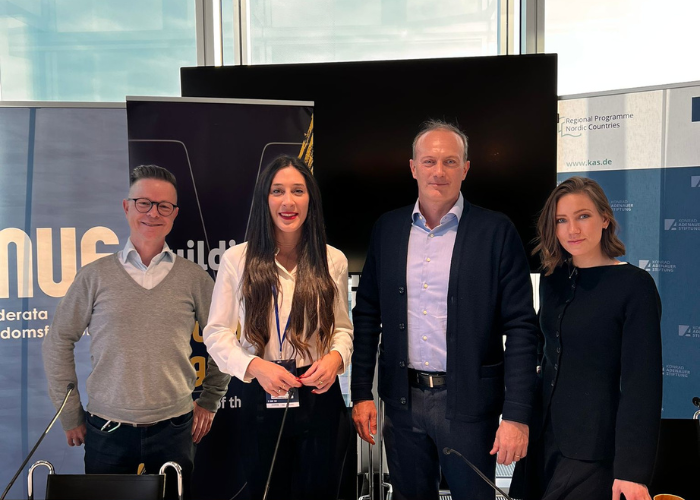
Stockholm, 29 November 2025 Saturday we were in Stockholm for the Council Meeting of YEPP – the youth movement of the European People’s Party – to discuss the future of nutrition, health, and innovation in Europe. During the panel “Nutrition and Health in the EU – Avoiding Overregulation in the Single Market,” we engaged with […]
From One-Size-Fits-All to Metabolic Flexibility: The Economic Case for Adaptive EU Nutrition Policy

Leggi l’articolo in italiano Europe spends €375 billion annually on diet-related diseases while maintaining dietary guidelines that ignore documented metabolic diversity. When the PREDICT study revealed that humans eating identical meals show 103% variation in fat response and 68% in glucose, it confirmed what clinicians observe daily: one-size-fits-all nutrition policies fundamentally misunderstand human metabolism. The […]
Longevity: Policies and Strategies to Live Longer

Leggi l’articolo in italiano Obesity is the silent pandemic of our time: it weighs heavily on people’s lives, the economy, and their freedom of choice. With the new book “Obesity. Instructions for Rebellion: The Mediterranean Way to Regain Balance, Health and Freedom of Choice”, we clearly explain the true causes of the problem and propose […]
Tackling the Obesity Epidemic

Spazio Nutrizione, 17 October 2025 On Friday, 17 October, Pietro Paganini took part in the roundtable “Obesity: Strategies and Tools to Face the Epidemic of the Third Millennium”, held within the framework of Spazio Nutrizione. The event brought together leading experts, academics, and practitioners to explore one of the most pressing public health challenges of […]
Stop Blaming Ultra-Processed Foods

Pietro Paganini was recently interviewed by Euractiv, one of the leading media platforms covering European politics and policy from Brussels. The discussion focused on the ongoing debate around so-called ultra-processed foods (UPFs) and the role they are alleged to play in obesity and non-communicable diseases (NCDs). Read the full article on Euractiv or a summary […]
Obesity: More Than the Scale – It’s About Life

Leggi l’articolo in italiano On the occasion of the approval of the new obesity law, Michele Carruba and Pietro Paganini published an article in Quotidiano Sanità. Highlighting the multifactorial nature of the disease, they critically examine the policies implemented so far and propose an innovative approach based on education, prevention, and citizens’ empowerment. Read the […]
Educate or Tax? The Great Sugar Misunderstanding

Leggi l’articolo in italiano Demonizing sugar has become a trend, but is cutting it out of our diet really the solution? No. Once again, it’s not the food itself that is harmful, but the way we overconsume it. Sugar: What It Is and What It Does Sugar, in its many forms, is much more than […]
Wearables, AI & Precision Nutrition: What the EU Can Learn from the US

EUNews has published Pietro Paganini’s commentary on the latest White House initiative to improve Americans’ health, a plan that combines technology, prevention, and freedom of choice, while the rest of the world, including Europe, remains mired in ideological debates instead of embracing U.S.-style pragmatism. Read the full piece on EUNews or find a summary below. […]
The american reform against obesity: more movement, less impositions

Leggi l’articolo in italiano With the reintroduction of the Presidential Fitness Test, the Trump administration has taken a bold and effective step to address obesity, one of the most pressing health and economic challenges of our time. While the United Nations was preparing the Fourth High-Level Meeting (HLM4) on non-communicable diseases, pushing increasingly ideological and […]
Public Health Policies: From “One Size Fits All” to Personalised Nutrition

Ahead of the Fourth High-Level Meeting (HLM4) of the UN General Assembly on the prevention and control of NCDs and the promotion of mental health and wellbeing, we brought this conversation to the heart of Europe . Prescriptive policies – taxes on specific foods, mandatory reformulation, and alarmist front-of-pack labels – are often presented as […]